
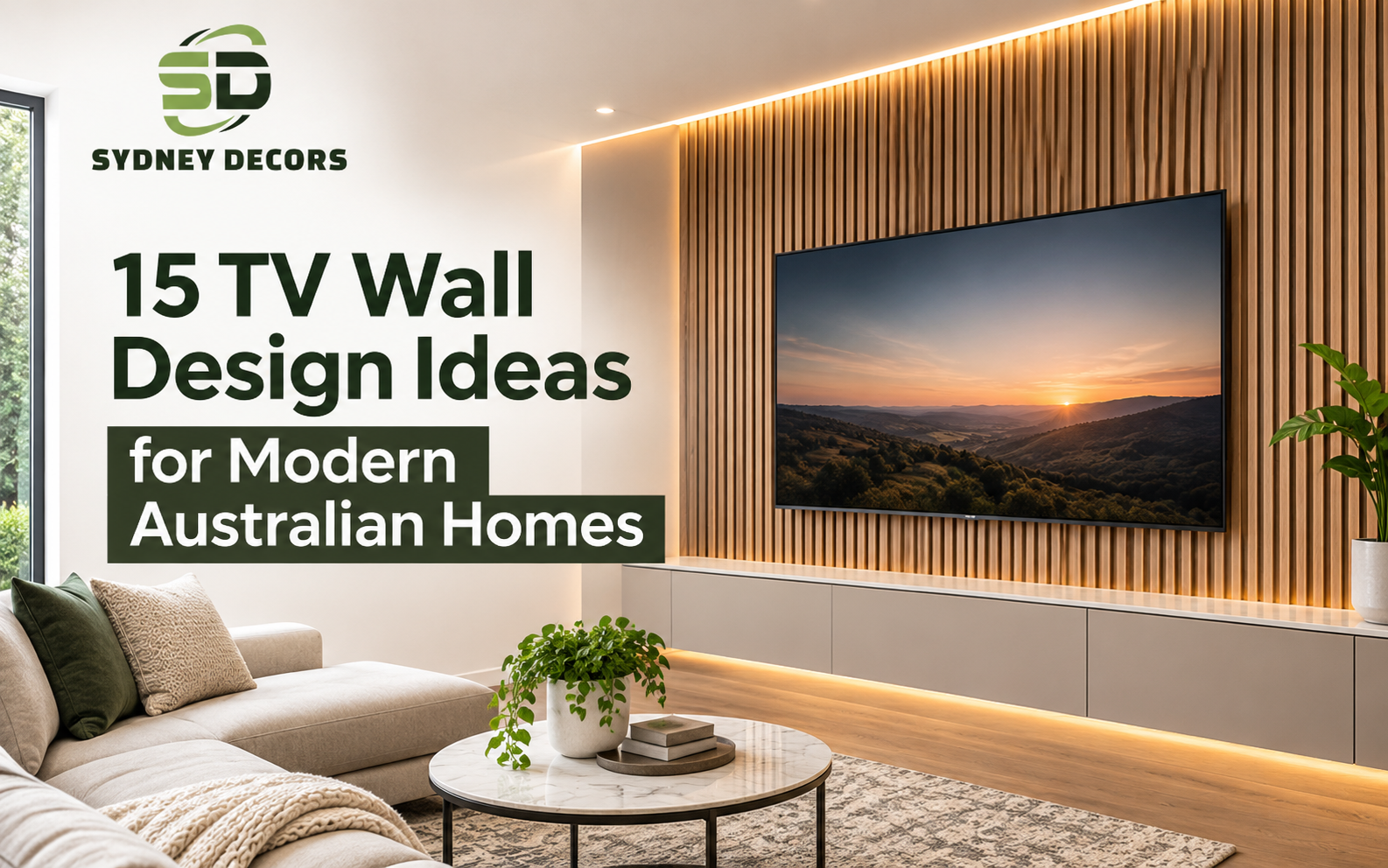
A television is often the main feature of a living room, but the wall behind it can easily become an overlooked part of the interior. These TV wall design ideas show how the right materials, styling and storage can turn that area into an attractive focal point that complements the rest of your home.
The best options balance appearance and practicality. Whether you prefer the warmth of timber, the clean look of minimalist panels or the elegance of a stone-inspired finish, there are plenty of living room TV wall ideas that suit your space.
If you are planning to update your living room, here are 15 options for modern TV wall design to inspire your next project.
Sydney Decors supplies and installs decorative wall panels. Joinery, electrical work and fireplaces are handled by separate licensed trades.
1. Modern Timber TV Wall Design
A wooden TV wall design brings warmth and natural texture to a living room. A timber feature wall behind the television can create a welcoming atmosphere while adding visual interest to an otherwise plain surface.
You can choose from natural wood tones, darker timber finishes or wood-look panels to complement your existing furniture. Pair the feature with a simple floating cabinet for a balanced and contemporary appearance.
2. Vertical Timber Slat Wall
Vertical timber slats are a popular choice for contemporary interiors. Their narrow, evenly spaced lines add height and texture, helping the television wall become a distinctive feature without overwhelming the room.
Consider using slat panels across the full wall or behind the television only. Lighter timber tones work well in bright, relaxed interiors, while darker finishes can create a more dramatic look. This is one of the most versatile TV feature wall ideas for contemporary interiors.
3. Fluted Panel TV Wall
Fluted panels feature subtle grooves that create depth and a refined finish. They are suitable for homeowners who want something more detailed than a flat painted wall but prefer a restrained design.
Use fluted panels behind the television and keep surrounding furniture simple. This approach allows the texture to stand out while maintaining a clean overall appearance.
4. Marble or Stone-Look Feature Wall
For a more luxurious interior, consider a marble or stone-look feature. Large-format panels with natural-looking patterns can create an elegant backdrop for the television.
Choose a finish that works with your flooring, cabinetry and other room details. Light stone tones can make a space feel open, while darker patterns can add contrast and sophistication.
5. Concrete-Look TV Feature Wall
A concrete-look finish can give a living room an understated industrial or contemporary feel. Its soft texture and neutral colour palette work particularly well with black television screens, timber furniture and simple decorative accessories.
This style is a good option if you prefer a modern interior without too many decorative details.
6. Dark Charcoal Feature Wall
A dark charcoal or deep grey wall can help the television blend into its surroundings when the screen is switched off. It also creates contrast against lighter furniture and accessories.
To avoid making the room feel too dark, balance the feature with suitable lighting, lighter flooring or warm timber finishes. This design can work particularly well in larger living rooms with good natural light.
7. Two-Tone TV Wall Design
A two-tone feature combines two complementary colours or materials to create a more distinctive look. For example, you could pair warm timber panels with a neutral painted surface or combine a darker panel with a lighter surrounding wall.
Keep the colour combination consistent with the rest of your interior. A carefully balanced palette can make the television area feel connected to the overall room design.
8. Full-Height Feature Wall
A full-height feature extends from floor to ceiling, creating a strong visual statement. This approach can make a living room feel more cohesive by giving the television area a clear design identity.
You can use timber-look panels, textured finishes or a combination of materials. Consider the height and width of the wall before selecting a layout so the feature remains proportionate to the room.
9. Framed TV Feature Wall
A framed design uses panels or contrasting finishes to create a defined area around the television. It can give the wall a more structured appearance without requiring an elaborate layout.
For a subtle finish, use a narrow border in a complementary colour. Alternatively, combine the frame with textured panels to create a more prominent feature.
10. Recessed Niche for a Clean Finish
A recessed niche can provide a dedicated space for the television or selected decorative items. It helps create a built-in appearance and can reduce the visual clutter associated with multiple shelves and accessories.
Framing and structural work for the recess should be completed by a suitable builder or carpenter, so plan this feature before the panels are installed.
11. Floating TV Unit with Wall Panels
Among the most popular modern TV unit designs, a floating unit creates a streamlined appearance by keeping the floor area beneath it clear. When combined with TV wall panels, it can create a coordinated feature that also provides useful storage.
Choose a cabinet finish that complements the panels rather than competing with them. Make sure the unit is properly supported and suitable for the weight of the equipment and items you plan to store.
12. LED-Lit TV Wall
LED lighting can add atmosphere and highlight the textures of a feature wall. Strip lighting behind panels, beneath a floating cabinet or around a niche can create a soft visual effect.
Warm lighting generally creates a relaxed living room atmosphere, while cooler lighting can suit a more contemporary scheme. Plan the lighting position and cable access before installation to achieve a neat finish.
13. TV Wall with Open Shelving and Storage
Open shelves provide space to display books, artwork, plants and decorative objects around the television. Combining shelves with closed cabinetry gives you a practical way to balance display and storage.
Avoid overcrowding the shelves, as too many objects can make the area look busy. Leave enough open space around the television so it remains the main focus.
14. Space-Saving TV Wall for Small Living Rooms
Smaller living rooms benefit from designs that use available wall space efficiently. Slim panels, compact floating cabinets and carefully positioned shelves can add style without taking up unnecessary floor area.
When exploring TV wall design ideas for a compact home, consider lighter finishes and simple layouts. Avoid bulky cabinetry or too many contrasting materials, as these can make the room feel crowded.
15. TV Wall with a Fireplace Feature
If your living room includes a fireplace, combining it with the television wall can create a striking focal point. A balanced arrangement can bring the two features together while maintaining a clear visual layout.
Before choosing this option, check the fireplace manufacturer’s requirements for heat clearance, ventilation and the safe positioning of electronic equipment. The television should not be exposed to temperatures outside its manufacturer’s recommendations.
Before choosing from different TV wall design ideas, consider how the feature will work in your home as well as how it will look. A little planning can help avoid practical issues later.
The right design depends on your room size, interior style, storage needs and preferred materials. Before making a decision, think about how the living room is used every day.
If you prefer a warm and natural interior, timber or wood-look panels may be suitable. For a more refined appearance, consider stone-look finishes or fluted panels. If storage is a priority, a floating cabinet with shelving can combine practical use with a coordinated design.
It is also worth considering how the feature will look alongside your existing furniture and flooring. Reviewing samples and material combinations can help you make a more informed choice.
For additional inspiration, browse our wall panels and more feature wall design ideas for other rooms in your home.
You can also learn more about our interior designer services in Sydney and interior decorator services when planning a coordinated look for your home.
A well-designed television wall can bring together colour, texture, storage and lighting to make your living room feel more considered. From timber slats and fluted panels to floating cabinets and stone-look finishes, the right combination can make a noticeable difference to your interior.
The most effective TV wall design ideas are those that suit your room’s proportions and everyday needs. Take time to compare materials, consider practical requirements and choose a finish that works with the rest of your home.
Sydney Decors supplies and installs feature wall panels for homes in Sydney, Brisbane and Canberra. Contact us to discuss your project and explore suitable design options.
Popular options include timber slat panels, fluted finishes, stone-look feature walls, floating TV units and LED-lit panels. The best choice depends on your room size, interior style and storage requirements.
Timber-look panels, fluted panels and stone-look finishes are all popular choices. Consider the appearance, maintenance requirements and suitability of each material for your space before making a decision.
Yes. Timber slat panels can add texture and visual height without requiring bulky furniture. Using them on a selected section of the wall can help keep a smaller living room feeling balanced.
Cable access can be planned through suitable wall cavities, cabinetry or cable management systems. The approach depends on the wall construction and electrical requirements. Any mains electrical work must be completed by a licensed electrician.
Yes. A floating cabinet can provide storage while keeping the floor area underneath clear. Make sure the wall and mounting system are suitable for the cabinet’s weight and intended use.
Choose a simple layout, slim cabinetry and finishes that complement the room’s existing colours. Avoid oversized features, and make sure the television remains at a comfortable viewing position.
The cost depends on the wall size, materials selected and installation requirements. Contact Sydney Decors to discuss your project and request a quote.
A common guide is to place the centre of the screen at about eye level when you are seated. Check your seating height and preferred viewing distance before drilling.
RECENT POST