
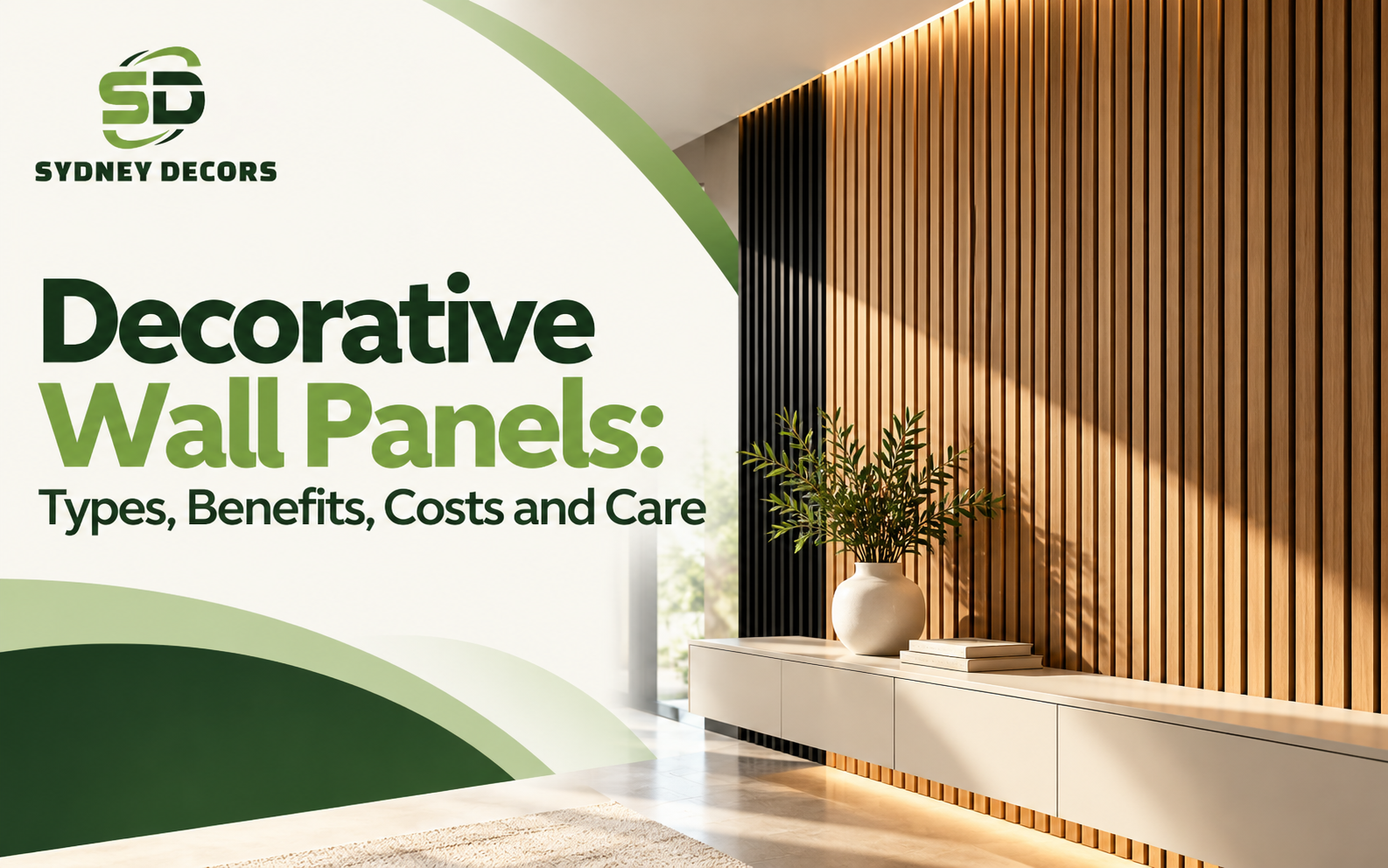
Decorative wall panels give a flat wall texture, pattern and warmth without plastering, repainting or heavy building work. They have become a popular route to a feature wall, but the range of options can feel overwhelming when you first start comparing them.
This guide explains the main types, their benefits, what affects the price and how to look after them, so you can choose with confidence.
They are ready-made boards or sheets fixed to an interior wall to add a patterned, textured or timber-look surface. You may also see them called interior wall panels or wall cladding. Unlike paint, they add depth you can see and feel, and some styles can help mask small surface flaws. They also differ from traditional panelling, which is built up on site from rails and stiles, because most decorative panels arrive ready to fix.
Each type creates a different mood, so start with the look you want. Ranges often overlap, so a single panel may be both slatted and timber-look.
Panel type | Look and feel | Best for |
Timber-look | Warm grain, usually prefinished | The feel of wood in a ready-to-fit format |
Slatted or fluted | Parallel vertical lines | Adding height and rhythm |
3D textured | Geometric relief that catches the light | Statement walls with shadow play |
Stone or brick-look | Rustic or industrial surface | Character and a tactile finish |
Flexible and adhesive | Lighter and easier to handle | Simpler fitting on smaller areas |
Slatted and 3D designs deliver the strongest visual rhythm, while timber-look and stone-look panels borrow the character of natural materials, often with less upkeep. Sydney Decors offers flexible and adhesive options in its wall panels range, which are worth a look if you want a lighter, simpler installation.
Panels earn their place for practical reasons as well as looks:
Most dry interior rooms suit panels, from living areas and bedrooms to hallways and home offices. For layouts, heights and room-by-room design, see our guide to wall panelling ideas. Outdoor walls are a different job, so look at exterior panels instead.
The price of decorative wall panels depends on several factors:
Measure your wall first, then ask for a quote based on real dimensions, so panels, trims and fitting are all included.
Lightweight adhesive panels on a clean, dry, flat wall can suit a confident DIYer. Larger walls, heavier materials or walls with switches and sockets are usually better handled by a professional. Either way, follow the manufacturer’s instructions, mark out fittings before cutting and test-fit a few panels before fixing. Professional help also makes sense when the wall is uneven, because preparation affects how well panels sit and how long they last.
Steam and splashes change the rules. Check each product’s moisture rating before you buy, ask whether the finish and fixings suit damp conditions, and make sure the room has good ventilation. Timber and MDF generally need more protection from moisture than PVC, so confirm suitability with the supplier. For general guidance on ventilation and condensation in Australian homes, see the Your Home guide.
Most finishes need little attention. Dust regularly with a dry microfibre cloth and wipe marks with a lightly damp one. Avoid abrasive cleaners and soaking, and check the care advice for your product, because cleaning rules differ between finishes. Check the panels every few months for lifting edges or loose trims, and deal with small issues early.
If you are comparing decorative wall panels in Sydney, bring your wall measurements and a few photos of the room. The Sydney Decors team can then suggest panels that fit your space and budget.
Decorative wall panels work best when the type, finish and installation all suit the room. Start with one wall, request a sample and ask about care and fitting before you commit.
Sydney Decors works with homes across Sydney, Brisbane and Canberra. Explore the services page or request a free quote when you are ready to start.
For many homes, yes. They add texture and a finished look faster than most wall treatments, provided the material suits the room and the fitting is done properly.
Often, if the wall is sound, clean and dry. Fixing methods vary by product, so follow the manufacturer’s guidance.
It depends on how they were fixed. Screwed or battened panels usually come off more cleanly than glued ones, which may pull at the surface beneath, so ask about the fixing method before you buy.
RECENT POST