
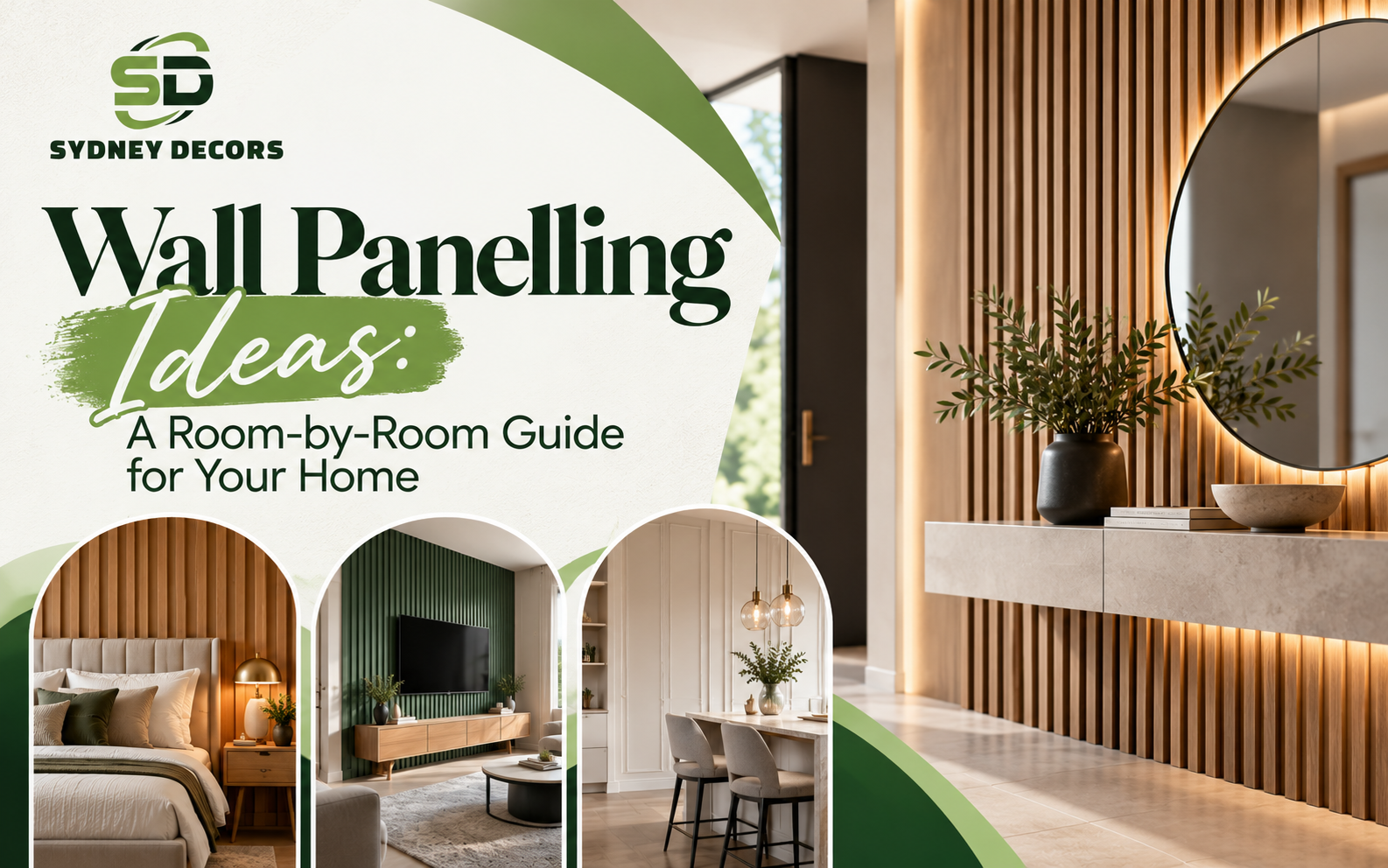
Wall panelling ideas work best when they are planned around the room, not copied from a photo. The panel that looks striking behind a bed can feel heavy in a narrow hallway, so the purpose, proportions and light of each space should guide your choice.
This guide walks through design directions for five rooms, then shares planning rules that apply anywhere in the home.
The wall behind the sofa, or the one you see first on entering, carries the most attention, so it is the natural home for living room wall panels. Slim vertical slats make a ceiling look taller, while geometric patterns bring a crisp, contemporary feel. Modern wall panels can also frame a television, so the screen looks built in rather than hung on.
Keep the panelled wall in conversation with the rest of the room. Repeat its tone in a cushion, rug or curtain, and let the other walls stay quiet. For more feature wall designs, browse the gallery at Sydney Decors, or read our post on home decorating ideas for Sydney homes for the wider styling picture.
A panelled wall behind the bed works like an oversized headboard. Make the panelling slightly wider than the bed so the arrangement feels anchored rather than squeezed, and keep the pattern gentle if the room already has bold bedding or curtains. Interior wall panels in soft greys, warm whites or muted greens suit a restful space, and wall lights mounted over the panelling add a soft glow at night.
Full-height panels create a hotel-style backdrop, whereas panels that stop at head height give a lower, more traditional look. Mark the positions of bedside tables, lights and power points before fixing anything, so the final layout works from day one.
A hallway offers little floor space but plenty of wall, which makes it ideal for panelling. Thoughtful wall panelling ideas here add character without crowding anyone. Vertical lines suggest extra height, horizontal lines emphasise length, and a pale finish bounces light along a corridor that has no windows.
At the front door, a panelled section can double as a landing zone. Add a row of hooks, a slim shelf or a bench below, and the wall earns its place. Carry one detail from the hallway into neighbouring rooms, such as the same colour or slat width, so the home reads as one design.
In an open-plan home, a panelled wall behind the dining table marks out the eating area without adding a partition. Framed, wainscot-style wall panelling styles suit traditional furniture, while flat slats or minimal grooves suit sleek, contemporary tables. If you have a banquette or bench seat, panelling behind it gives the seating a finished, built-in look.
Choose one pattern per wall and let your pendant light or artwork take the spotlight. In a small dining area, panelling a single wall gives definition without making the room feel smaller.
The wall behind your desk is what everyone sees on a video call, so a tidy panelled surface looks professional straight away. Calm, mid-tone finishes usually read well on camera, while very busy patterns can distract. Leave space for shelving, monitors and cable runs, and note the power point positions before choosing a layout. If the room doubles as a guest bedroom, choose a finish that works comfortably in both roles.
The most effective wall panelling ideas follow a few simple rules:
Treat these as starting points rather than strict laws. A room with high ceilings can carry a bolder pattern than a compact one, and a bright room can handle darker panelling that would swallow a dim space.
Before you buy anything, test the design on the wall itself:
If you are exploring wall panelling ideas in Sydney, think about the style of the home as well as the room. A compact apartment, a family home with high ceilings and a new open-plan build each suit a different scale of panelling, and the Sydney Decors team can help you test options against your own floor plan.
For help with wall panel materials, costs and care, read our guide to decorative wall panels.
Good wall panelling ideas start with one wall and one clear purpose, whether that is warmth, height or definition. Sketch the layout, test it with tape and let the room’s light and proportions guide the final design.
Sydney Decors can help turn a sketch into a finished wall in Sydney, Brisbane or Canberra. See the wall panels range or request a free quote to get started.
RECENT POST